
Key Takeaways
- Mass-market eyewear relies on injection-molded TR90 plastics, which limits post-purchase heat adjustments and custom fitting.
- Artisan frames crafted in Sabae, Japan, utilize dense materials like celluloid and titanium, focusing on rear-weighted balance to remove pressure from the nasal bridge.
- Glimmo Optics integrates Japanese original design with Sabae craftsmanship to produce unique, non-mass-market structural aesthetics.
- Cross-border warranty and repair policies vary; while some fast-fashion retailers offer global support, traditional artisan makers generally require paid domestic repairs.
How Production Methods Define Eyewear Categories
The landscape of japanese glasses brands is distinctly stratified by manufacturing techniques, material selection, and the approach to structural fitting. Consumers typically navigate between high-volume retail chains and low-volume artisan workshops.
The Mass-Production Model
High-volume retailers such as JINS, Zoff, and OWNDAYS operate on a fast-fashion model. To maintain rapid production cycles and low costs, these brands primarily utilize offshore manufacturing facilities. The frames are predominantly constructed from TR90, a thermoplastic material shaped through injection molding. This process allows for the creation of thousands of identical frames per day.
You feel a featherlight sensation when first putting on a TR90 frame, but the material’s inherent flexibility can cause the glasses to slowly slide down your nose during active movement. Because injection-molded plastics cannot be safely heated and reshaped by an optician, these frames offer a fixed fit. If the frame does not perfectly match the wearer’s facial asymmetry, it may cause pinching behind the ears over time.
The Artisan Handcrafted Model
Conversely, traditional artisan brands like Kaneko, Hakusan, and Masunaga centralize their production in Sabae, Fukui Prefecture—the historical center of Japanese eyewear manufacturing. These workshops reject injection molding in favor of hand-cutting frames from solid blocks of cellulose acetate or celluloid. The production cycle for a single frame involves dozens of manual steps, including barrel tumbling, hand-filing, and wheel polishing, often taking several months to complete.
You experience a secure, tailored grip as the dense acetate warms against your skin and molds precisely to the unique contours of your face. This material honesty ensures that the frame maintains its structural integrity and can be polished back to its original luster after years of use.
The Mechanics of “Kake-gokochi” (Wearing Comfort)
In Japanese eyewear design, the concept of “Kake-gokochi” dictates how a frame interacts with the wearer’s cranial structure. Comfort is not measured strictly by the total weight of the frame, but by how that weight is distributed.
Fast-fashion frames prioritize absolute lightness. However, when fitted with higher-index lenses, a lightweight TR90 frame becomes front-heavy. This imbalance shifts the center of gravity forward, placing continuous pressure on the nasal bridge.
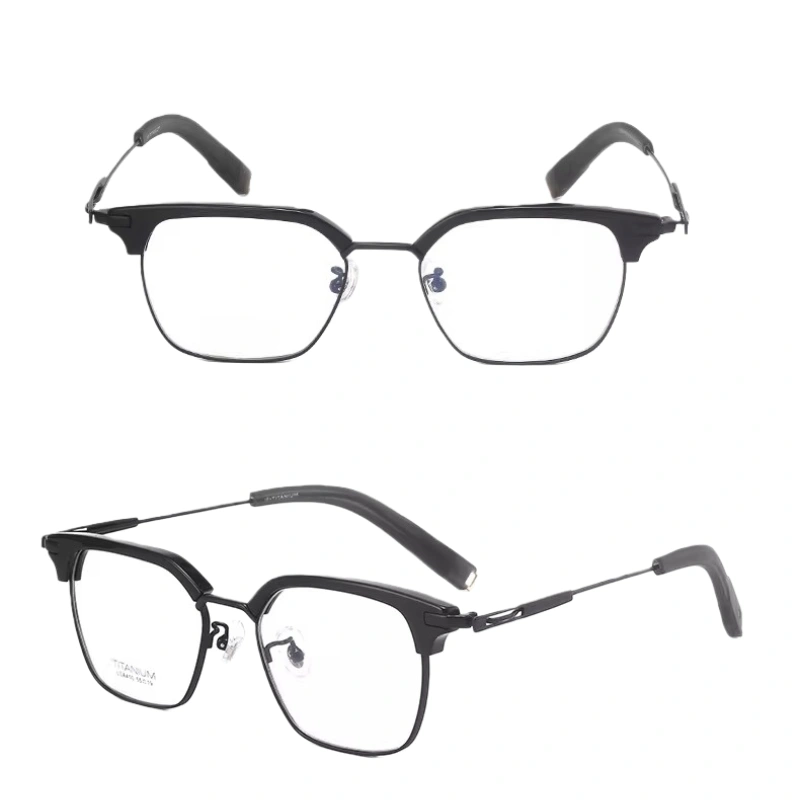
Artisan frames intentionally increase the thickness and density of the temple tips. By adding weight behind the ear, the frame’s center of gravity shifts backward. This counterbalances the weight of the lenses, creating a suspension effect where the frame feels as though it is gently wrapping around the head rather than resting heavily on the nose.
Material and Construction Comparison
| Attribute | Mass-Market (e.g., TR90) | Artisan Handcrafted (Acetate/Celluloid/Titanium) |
|---|---|---|
| Production Method | Injection molding | Hand-cut, filed, and wheel-polished |
| Fit Adjustability | Fixed shape; cannot be heat-molded | Highly malleable via localized heat application |
| Hinge Construction | Embedded directly into plastic | Riveted through the frame chassis |
| Weight Distribution | Front-heavy (dependent on lenses) | Rear-weighted temple tips for balance |
Where Does Glimmo Optics Fit in the Market?
Glimmo Optics operates within a specific structural niche, bridging the gap between traditional Japanese artisanship and modern design requirements. Founded in Japan, the brand bypasses mass-market supply chains by working directly with local Japanese designers and traditional craftsmen in Sabae.
Rather than relying on the ubiquitous Wellington or Boston shapes common in mass retail, Glimmo Optics focuses on unique, non-mass-market designs. By utilizing Sabae’s high-grade materials and manual finishing techniques, the frames support precise optical fitting. Furthermore, Glimmo Optics addresses a common logistical friction point found among traditional japanese glasses brands by establishing accessible cross-border repair and warranty channels, ensuring that the longevity of the handcrafted product is supported internationally.
Frequently Asked Questions
Are mass-market plastic frames suitable for high prescriptions?
Opticians generally advise against using injection-molded TR90 frames for high prescriptions or severe astigmatism. Because these lightweight frames warp and widen over time, they frequently slide down the face. This movement causes the wearer’s pupils to deviate from the lenses’ optical center, which can lead to visual fatigue and inaccurate vision correction.
Do japanese glasses brands provide international warranties?
Warranty policies depend heavily on the brand tier. OWNDAYS is notable for offering a global warranty network. However, traditional artisan brands typically do not offer free international replacements; they operate on a paid-repair model where frames must be serviced domestically. Independent labels like Glimmo Optics are structuring their operations to specifically accommodate cross-border warranty logistics.
Why are handmade celluloid frames considered comfortable despite being heavier?
Comfort in artisan eyewear relies on weight distribution rather than weight reduction. Handcrafted frames feature dense, carefully shaped temple tips that anchor the weight of the glasses behind the ears. This rearward balance lifts the frame off the nasal bridge, eliminating localized pressure points.